What is Takht Sri Damdama Sahib?
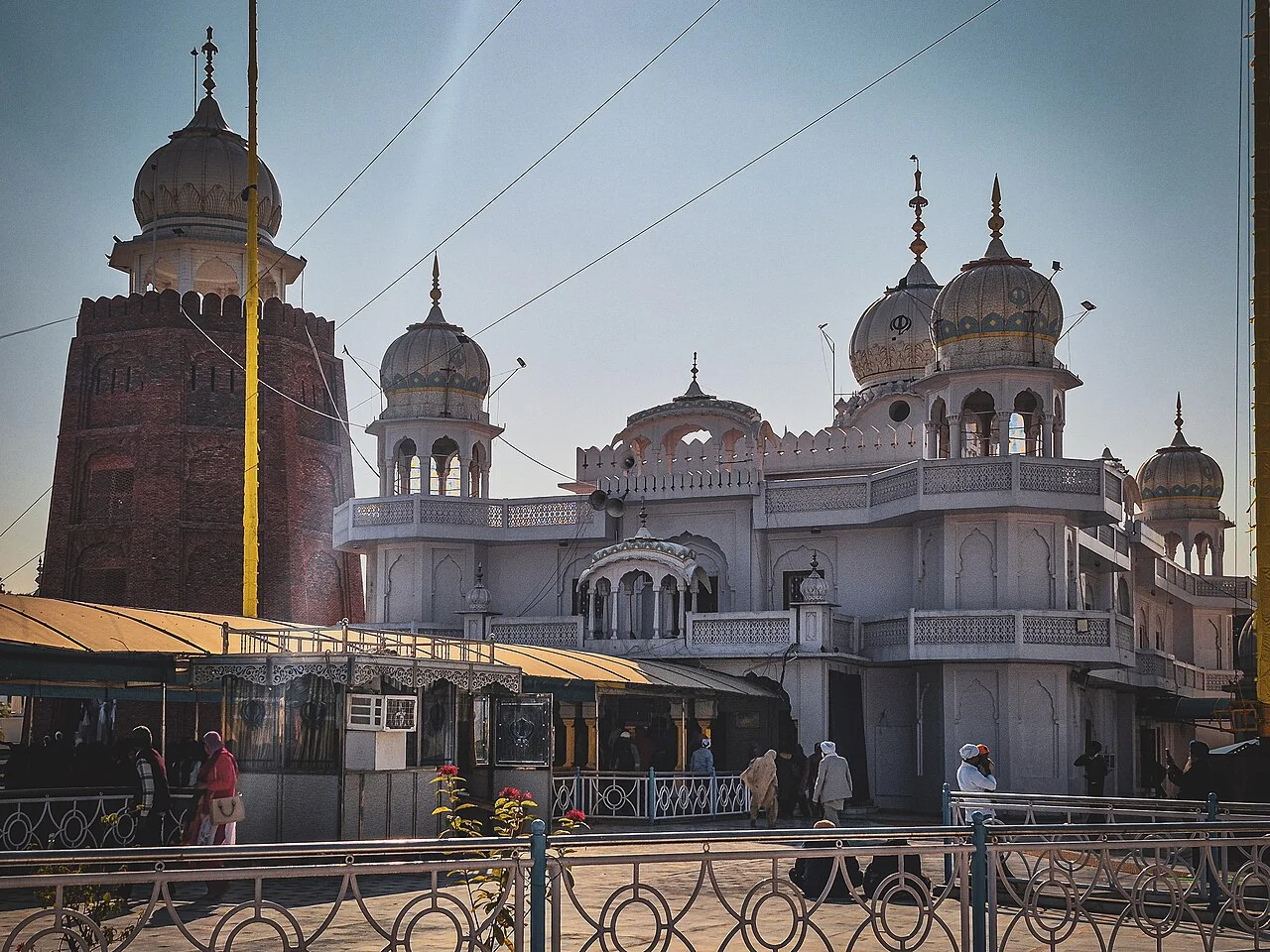
Takht Sri Damdama Sahib at Talwandi Sabo in Punjab is one of the five Takhts of Sikhism, the seats of temporal authority. It is where Guru Gobind Singh had the final recension of the Guru Granth Sahib prepared, and where he blessed the town as Guru ki Kashi, a seat of Sikh learning. With Sevahey, a verified Sevak offers your ardas there and sends same-day proof.
Where is Damdama Sahib, Talwandi Sabo?
Takht Sri Damdama Sahib is at Talwandi Sabo in Bathinda district, Punjab. Its address is Takht Sri Damdama Sahib, Talwandi Sabo, Bathinda, Punjab 151302. It is one of three Takhts in Punjab, along with the Akal Takht at Amritsar and Takht Sri Keshgarh Sahib at Anandpur Sahib.
What does 'Damdama' mean?
Damdama means a breathing-place or halting-place. Guru Gobind Singh arrived at Talwandi Sabo after the campaigns of 1705 and rested here, and the name records that pause. The stay turned into the most consequential literary work in Sikh history, the preparation of the final recension of the Guru Granth Sahib.
What is the Damdami Bir?
The Damdami Bir is the final recension of the Guru Granth Sahib, prepared at Damdama Sahib in Talwandi Sabo. Guru Gobind Singh dictated it to Bhai Mani Singh, adding the hymns of the ninth Guru, Guru Tegh Bahadur, to the scripture Guru Arjan had compiled at Amritsar in 1604. It runs to 1,430 angs and is the version Sikhs read today.
Who wrote the Guru Granth Sahib at Damdama Sahib?
Bhai Mani Singh was the scribe. Guru Gobind Singh dictated the final recension of the Guru Granth Sahib to him at Talwandi Sabo, incorporating the hymns of Guru Tegh Bahadur. The Guru did not add his own compositions to the scripture, which is one reason the Damdami Bir is regarded as the settled and complete text.
Why is Damdama Sahib called Guru ki Kashi?
Guru Gobind Singh blessed Talwandi Sabo as Guru ki Kashi because of the scriptural work done there, Kashi, or Varanasi, being the traditional seat of Sanskrit learning. The name marks Damdama Sahib as a seat of Sikh scholarship, and the town remains associated with the study of Gurbani rather than with a battlefield.
When did Damdama Sahib become the fifth Takht?
The Shiromani Gurdwara Parbandhak Committee recognised Takht Sri Damdama Sahib as the fifth Takht by a resolution of 18 November 1966, and the Government of India recognised it in April 1999 during the tercentenary of the Khalsa. It is the most recently recognised of the five, and the recognition is contested, the Budha Dal of the Akali-Nihang Sikhs holds that its own seat should be the fifth Takht instead.
Which of the five Takhts is Damdama Sahib?
Takht Sri Damdama Sahib at Talwandi Sabo is one of the five Takhts of Sikhism, alongside the Akal Takht at Amritsar, Takht Sri Keshgarh Sahib at Anandpur Sahib, Takht Sri Patna Sahib, and Takht Sachkhand Sri Hazur Sahib at Nanded. The Akal Takht is the first and highest of the five; Damdama Sahib was the last to be recognised.
What are the timings at Takht Sri Damdama Sahib?
Gurudwaras, including Takht Sri Damdama Sahib, are generally open through the day and welcome anyone regardless of faith. The day is set by the Guru Granth Sahib, not by fixed shop hours: prakash, when the scripture is installed, happens in Amrit Vela (roughly the hours between 2 and 6 in the morning) and sukhasan, when it is carried to rest, at night. Those points shift with the season, so confirm the day's schedule with the Takht before travelling. Your Sevahey Sevak times your seva to that day's actual schedule and confirms the slot in the app.
What happens at Damdama Sahib on Vaisakhi?
Vaisakhi is the largest gathering of the year at Takht Sri Damdama Sahib, when a great fair draws sangat to Talwandi Sabo. It is also the festival at which the Nishan Sahib, the Sikh flag flying outside the Gurudwara, is lowered, washed, and re-robed each year. You can request that your ardas be offered on Vaisakhi when you book through Sevahey.
How do I book an online ardas at Damdama Sahib?
Open the Sevahey app, choose Takht Sri Damdama Sahib at Talwandi Sabo, and select a seva. A verified Sevak then offers your ardas at the Gurudwara and sends you same-day proof. You do not need to travel to Punjab yourself.
How much does an ardas at Damdama Sahib cost?
Every full seva at Takht Sri Damdama Sahib is ₹899. There is no subscription, you pay only for the seva you choose.
What proof will I receive after the Damdama Sahib seva?
After your seva at Damdama Sahib you receive GPS-tagged photos from the Gurudwara, a short video of the offering, audio from the kirtan or ardas, and a handwritten note from the Sevak, usually the same day.
What is a Hukamnama and will I receive one from Damdama Sahib?
A Hukamnama is the day's command, a passage read at random from the Guru Granth Sahib and taken as guidance for that day. The Ardas & Hukamnama seva at Takht Sri Damdama Sahib is ₹899 through Sevahey, and the day's Hukamnama is shared back to you along with the proof of your ardas.
Can I have langar seva or karah prasad offered at Damdama Sahib?
Yes. A Karah Prasad & Langar Seva at Takht Sri Damdama Sahib is ₹899 through Sevahey. Karah prasad is the offering of wheat flour, ghee and sugar shared with everyone present after ardas, and langar is the free kitchen open to all regardless of faith or background, both offered in your name, with video and proof returned to you.
What is Damdama Sahib known for?
Takht Sri Damdama Sahib is one of the five Takhts, honoured as Guru ki Kashi, where Guru Gobind Singh had the final recension of the Guru Granth Sahib prepared with Bhai Mani Singh as scribe. With Sevahey, a verified Sevak offers your ardas there and sends same-day proof.
Can I have an ardas offered at Damdama Sahib from abroad?
Yes. Sangat anywhere in the world can have an ardas offered at Takht Sri Damdama Sahib through Sevahey and receive photo, video, and audio proof, a way to bow at Guru ki Kashi without travelling to Punjab.
Can I have an ardas offered at Damdama Sahib for Vaisakhi?
Yes. You can request a specific occasion such as Vaisakhi when you book, and your Sevak offers the ardas at Damdama Sahib on that day, subject to the Gurudwara's schedule.
Who can I book a Damdama Sahib ardas for?
You can request an ardas at Takht Sri Damdama Sahib for yourself, your parents, a child, an ancestor, or anyone in whose name you wish it offered. You provide the name and details when you book.
Why book a Damdama Sahib seva through Sevahey?
Every Sevak is identity-verified, you see exactly who offered your ardas at Damdama Sahib, and you receive GPS-tagged photo, video, and audio proof, not just a promise. Every full seva is ₹899, with the price shown upfront and no subscription.
 Place photo · Talwandi Sabo